Python Coding - Spring Term 2025
Beginner Python Coding
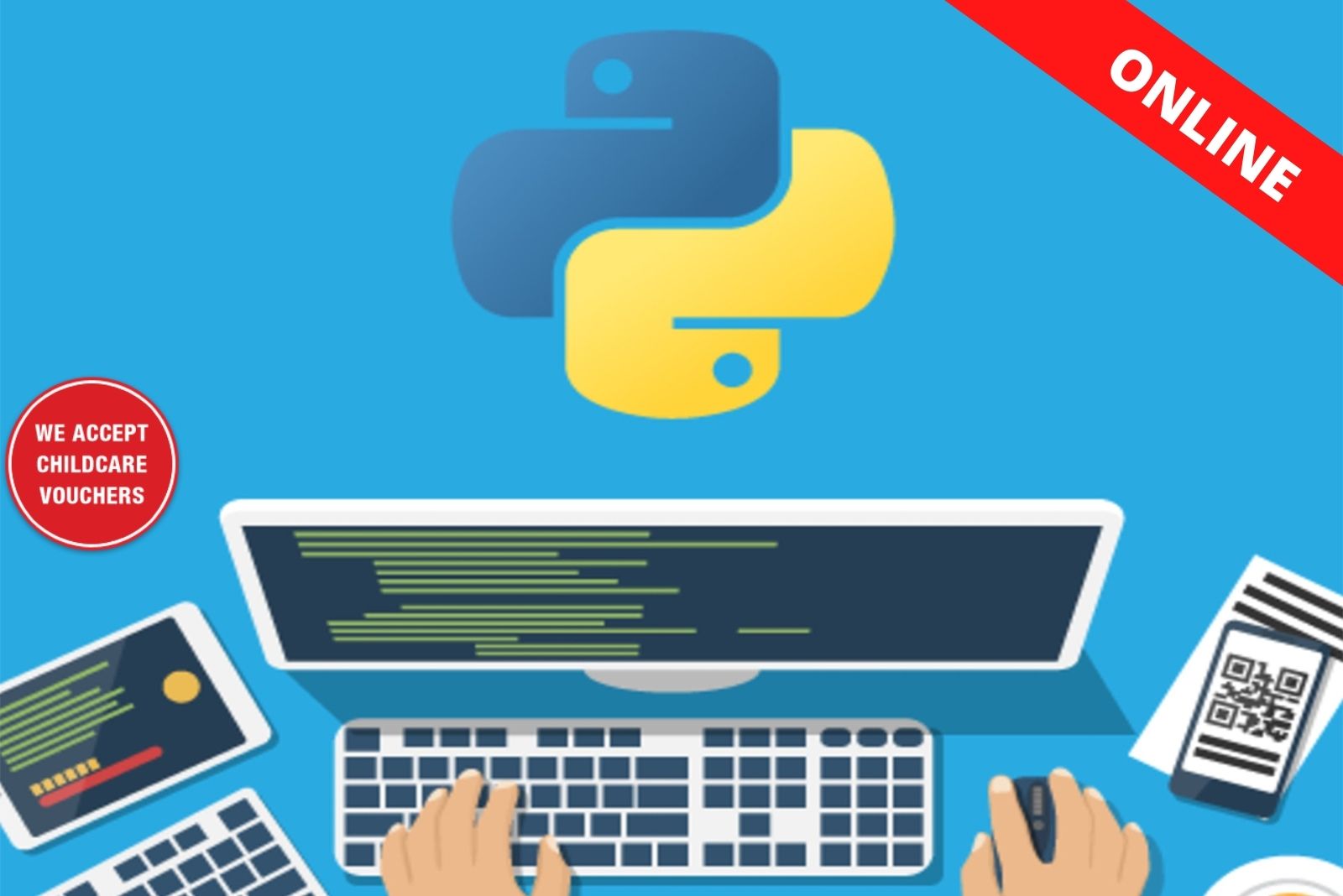
Students will learn to code in Python and create fun games and useful applications. Python is particularly suitable for this age group because it is concise, easy to read and has multiple applications in the real world (web development, app development and other scientific uses such as data science). It is the most popular programming language in the world and is widely used by all the leading tech companies such as Google, Amazon and Facebook.
The Python live weekly class is designed for late primary to secondary aged students who are looking to learn to code using a proper “grown-up” programming language.
This class is a great introduction to both fundamental programming concepts and the Python programming language. Students will be comfortable programming in Python and taking their newly acquired programming skills home.
- Learn Python syntax (structure)
- Use loops and conditionals (IF/THEN/ELSE)
- Understand variables (number, Boolean, string)
- Create and use functions
- Use all of the above to make a super cool game
Intermediate Python Coding
Intermediate Python Coding is suitable for students who have either completed our Python Coding 1 course or who have experience coding in Python. It is designed for late primary to secondary aged students who are looking to take their Python programming skills to the next level.
Advanced Python builds on the principles covered in beginner Python and covers object oriented programming in greater depth. Children will start to use popular Python libraries such as Pandas, Skikit for machine learning, and PyGame. We will also explore web development techniques using Python libraries such as Django.
The objective of the Python 2 course is to help children become confident and independent programmers.
- Learn Python syntax (structure)
- Object oriented programming
- Use loops and conditionals (IF/THEN/ELSE)
- Understand variables (number, Boolean, string)
- Create and use functions
- Graphics and web design frameworks
- Data science and machine learning techniques
Advanced Python Coding
Advanced Python Coding is designed for confident coders aged 11 or over, looking to apply their programming knowledge to data science and machine learning.
Students will be introduced to Interactive Python Notebooks, a tool used by professionals to write and present their code.
We will then look at the “Pandas” library, a useful tool that allows us easily to describe and manipulate large amounts of data.
We will then learn how to visualise our data by plotting graphs and spotting trends in the dataset. We’ll cover more useful libraries to add to our Data Science arsenal.
Finally, we will get a brief introduction to machine learning, the process of letting a computer recognise patterns and make predictions. In our case, this means recognising images that we give to it!
- Learn Python syntax (structure)
- Learn to use Interactive Python Notebooks
- Learn to use the “Pandas” library tool
- Describe and manipulate large real-life datasets
- Visualise your data by plotting graphs
- Spot trends in your dataset
- Explore additional libraries for mathematical modelling
- Get introduced to machine learning to help a computer recognise patterns and make predictions
Python Coding, Spring Term Timetable 2025:
[table id=7 /]
Duration: 10 weeks
Frequency: Once a week
Course Fee: £150
Age Requirement: 10 +
Note: Half term break (no sessions): 28th Oct – 1st Nov 024
Challenges may vary depending on the child’s age/ability as we have multiple streams running within each session.
What you would need:
- A computer or tablet with the Zoom web conferencing software installed.
- A laptop/computer (PC or Mac) with Python installed (download here)
Experience:
No prior coding experience necessary for beginner Python. If you have been to one of our camps before or attended a term-long beginner & intermediate Python classes, then we would suggest booking the Intermediate & advanced Python classes respectively which covers more advanced topics.
Python Coding - Spring Term 2025
£135.00
[fusion_builder_container hundred_percent=”no” hundred_percent_height=”no” hundred_percent_height_scroll=”no” hundred_percent_height_center_content=”yes” equal_height_columns=”yes” menu_anchor=”” hide_on_mobile=”small-visibility,medium-visibility,large-visibility” status=”published” publish_date=”” class=”pro-four-col-sec” id=”” background_color=”” background_image=”” background_position=”center center” background_repeat=”no-repeat” fade=”no” background_parallax=”none” enable_mobile=”no” parallax_speed=”0.3″ video_mp4=”” video_webm=”” video_ogv=”” video_url=”” video_aspect_ratio=”16:9″ video_loop=”yes” video_mute=”yes” video_preview_image=”” border_color=”” border_style=”solid” margin_top=”” margin_bottom=”” padding_top=”” padding_right=”” padding_bottom=”” padding_left=”” type=”legacy” flex_align_items=”stretch”][fusion_builder_row][fusion_builder_column type=”1_1″ layout=”1_1″ spacing=”” center_content=”no” link=”” target=”_self” min_height=”” hide_on_mobile=”small-visibility,medium-visibility,large-visibility” class=”” id=”” background_color=”” background_image=”” background_image_id=”” background_position=”left top” background_repeat=”no-repeat” hover_type=”none” border_color=”” border_style=”solid” border_position=”all” padding_top=”” padding_right=”” padding_bottom=”” padding_left=”” margin_top=”” margin_bottom=”” animation_type=”” animation_direction=”left” animation_speed=”0.3″ animation_offset=”” last=”true” border_sizes_top=”0″ border_sizes_bottom=”0″ border_sizes_left=”0″ border_sizes_right=”0″ first=”true”][fusion_content_boxes layout=”clean-vertical” columns=”1″ title_size=”18px” heading_size=”2″ title_color=”” body_color=”” backgroundcolor=”#f4f4f4″ icon=”” iconflip=”” iconrotate=”” iconspin=”no” iconcolor=”” icon_circle=”” icon_circle_radius=”” circlecolor=”” circlebordersize=”” circlebordercolor=”” outercirclebordersize=”” outercirclebordercolor=”” icon_size=”60″ icon_hover_type=”” hover_accent_color=”” image=”” image_id=”” image_width=”” image_height=”” link_type=”button” button_span=”” link_area=”” link_target=”” icon_align=”left” animation_type=”” animation_delay=”” animation_offset=”” animation_direction=”left” animation_speed=”0.3″ margin_top=”” margin_bottom=”” hide_on_mobile=”small-visibility,medium-visibility,large-visibility” class=”” id=”” image_max_width=””][fusion_content_box title=”Python Coding” backgroundcolor=”” icon=”” iconflip=”” iconrotate=”” iconspin=”no” iconcolor=”” circlecolor=”” circlebordersize=”” circlebordercolor=”” outercirclebordersize=”” outercirclebordercolor=”” image=”https://blackheath.codekids.org/wp-content/uploads/2019/05/python.jpg” image_id=”4534|full” image_max_width=”300″ image_height=”” link=”” linktext=”Read More” link_target=”_blank” animation_type=”” animation_direction=”left” animation_speed=”0.3″ animation_offset=””]
This course is designed for late primary to secondary aged students who are looking to learn to code using a proper “grown-up” programming language.
Learn to code in Python and develop fun games. Python is particularly suitable for this age group because it is concise and easy to read and has multiple applications in the real world (web development, app development and other scientific uses such as data science).
This camp is a great introduction to both fundamental programming concepts and the Python programming language. By the end, the students will be comfortable programming in Python and taking their newly acquired programming skills home.
- Learn Python syntax (structure)
- Use loops and conditionals (IF/THEN/ELSE)
- Understand variables (number, Boolean, string)
- Create and use functions
- Use all of the above to make a super cool game
[/fusion_content_box][/fusion_content_boxes][/fusion_builder_column][/fusion_builder_row][/fusion_builder_container][fusion_global id=”3277″]
[fusion_builder_container hundred_percent=”no” hundred_percent_height=”no” hundred_percent_height_scroll=”no” hundred_percent_height_center_content=”yes” equal_height_columns=”no” menu_anchor=”” hide_on_mobile=”small-visibility,medium-visibility,large-visibility” status=”published” publish_date=”” class=”” id=”” background_color=”” background_image=”” background_position=”center center” background_repeat=”no-repeat” fade=”no” background_parallax=”none” enable_mobile=”no” parallax_speed=”0.3″ video_mp4=”” video_webm=”” video_ogv=”” video_url=”” video_aspect_ratio=”16:9″ video_loop=”yes” video_mute=”yes” video_preview_image=”” border_color=”” border_style=”solid” margin_top=”” margin_bottom=”” padding_top=”” padding_right=”” padding_bottom=”” padding_left=”” type=”legacy”][fusion_builder_row][fusion_builder_column type=”1_1″ layout=”1_1″ spacing=”” center_content=”no” link=”” target=”_self” min_height=”” hide_on_mobile=”small-visibility,medium-visibility,large-visibility” class=”” id=”” background_color=”” background_image=”” background_image_id=”” background_position=”left top” background_repeat=”no-repeat” hover_type=”none” border_color=”” border_style=”solid” border_position=”all” animation_type=”” animation_direction=”left” animation_speed=”0.3″ animation_offset=”” last=”true” border_sizes_top=”0″ border_sizes_bottom=”0″ border_sizes_left=”0″ border_sizes_right=”0″ first=”true”][fusion_modal name=”read_more_lego” title=”Lego Robotics and Engineering” size=”large” background=”#f4f4f4″ border_color=”#ebebeb” show_footer=”yes” class=”” id=””]
 Children use the Lego WeDo 2.0 and Lego Mindstorms EV3 to design robots to solve real world problems. They learn to code their robots in interactive challenges. In addition to the basics of robotics, children learn key engineering principles such as force and motion, gear ratios and aerodynamics.
- Solve a real world ‘big problem’ such as pollution, animal welfare, dinosaur habitats
- Apply engineering concepts such as gear ratios, aerodynamics, motions
- Explore visual programming with the WeDo 2.0 and EV3 software
- Build robots that use motors
- Program and utilize different sensors
- Develop structural design skills
[/fusion_modal][/fusion_builder_column][fusion_builder_column type=”1_1″ layout=”1_1″ spacing=”” center_content=”no” link=”” target=”_self” min_height=”” hide_on_mobile=”small-visibility,medium-visibility,large-visibility” class=”” id=”” background_color=”” background_image=”” background_image_id=”” background_position=”left top” background_repeat=”no-repeat” hover_type=”none” border_color=”” border_style=”solid” border_position=”all” animation_type=”” animation_direction=”left” animation_speed=”0.3″ animation_offset=”” last=”true” border_sizes_top=”0″ border_sizes_bottom=”0″ border_sizes_left=”0″ border_sizes_right=”0″ first=”true”][fusion_modal name=”read_more_game_design” title=”Game Design and Design Thinking” size=”large” background=”#f4f4f4″ border_color=”#ebebeb” show_footer=”yes” class=”” id=””]
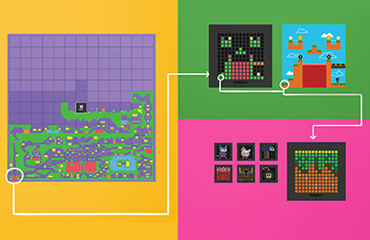 Make games rather than play them using your own ideas! Become game developers for a day using a physical and virtual platform for creating video games in the classroom. When students build games, they become the writers, artists, designers, and developers of their own interactive stories.
It all starts with an idea. We provide resources that encourage collaboration while guiding students through a design thinking process. Students create their own 13-bit layouts, characters, and art for their game.
- turn your physical creations into digital game elements
- edit and customize everything from characters to settings
- develop interactions and behaviour between characters
- tell rich, dynamic narratives through your games
- publish them so others can play them too
[/fusion_modal][/fusion_builder_column][fusion_builder_column type=”1_1″ layout=”1_1″ spacing=”” center_content=”no” link=”” target=”_self” min_height=”” hide_on_mobile=”small-visibility,medium-visibility,large-visibility” class=”” id=”” background_color=”” background_image=”” background_image_id=”” background_position=”left top” background_repeat=”no-repeat” hover_type=”none” border_color=”” border_style=”solid” border_position=”all” animation_type=”” animation_direction=”left” animation_speed=”0.3″ animation_offset=”” last=”true” border_sizes_top=”0″ border_sizes_bottom=”0″ border_sizes_left=”0″ border_sizes_right=”0″ first=”true”][fusion_modal name=”read_more_arvr” title=”Augmented Reality Coding with Merge Cube” size=”large” background=”#f4f4f4″ border_color=”#ebebeb” show_footer=”yes” class=”” id=””]
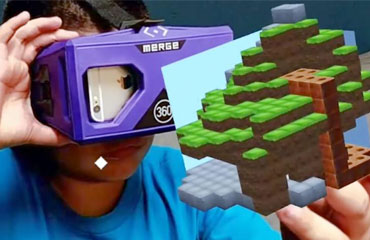 Hold a Merge Cube, and use design and coding principles to turn it into any virtual object you wish. Content creation for the best piece of tech we’ve seen in recent times.
Workshop participants use the MERGE Cube and turn it into a hologram that they can hold in their own hands! Participants learn design principles through the use of computer aided design (CAD) tools. They then learnt to code the merge cube to interact with an end user.
- Use visual block-based and intuitive programming language to code
- More advanced coders can have fun coding scripts to add interactions through JavaScript
- Use code to experiment with physics! Create simulations of physical phenomena and visualize abstract scientific concepts in 3D or in VR.
[/fusion_modal][/fusion_builder_column][fusion_builder_column type=”1_1″ layout=”1_1″ spacing=”” center_content=”no” link=”” target=”_self” min_height=”” hide_on_mobile=”small-visibility,medium-visibility,large-visibility” class=”” id=”” background_color=”” background_image=”” background_image_id=”” background_position=”left top” background_repeat=”no-repeat” hover_type=”none” border_color=”” border_style=”solid” border_position=”all” padding_top=”” padding_right=”” padding_bottom=”” padding_left=”” margin_top=”” margin_bottom=”” animation_type=”” animation_direction=”left” animation_speed=”0.3″ animation_offset=”” last=”true” border_sizes_top=”0″ border_sizes_bottom=”0″ border_sizes_left=”0″ border_sizes_right=”0″ first=”true”][fusion_modal name=”read_more_minecraft” title=”Coding with Minecraft” size=”large” background=”#f4f4f4″ border_color=”#ebebeb” show_footer=”yes” class=”” id=””]
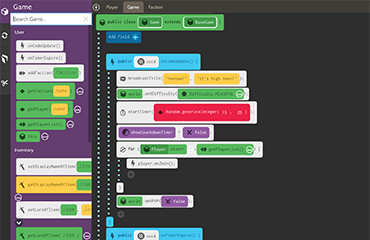 Learn how to code in Java with Minecraft in a highly interactive learning environment!
The participant can use a drag & drop interface which is highly intuitive, but the blocks also show the actual java code too. Coding concepts like variables, if/then/else statements and constructors will be learnt. More advanced participants can switch any time from block-based drag-and-drop code to Javascript.
The children can play with their creations and show their friends at the end of the session on a secure server that only the course participants on the day will have access to:
- Code in Minecraft using a Java editor
- Increase complexity with Conditions and Variables
- Learn about Boolean and Loops
- Test and debug using logic and systematic reasoning
- Connect your world and Play in Minecraft
[/fusion_modal][/fusion_builder_column][fusion_builder_column type=”1_1″ layout=”1_1″ spacing=”” center_content=”no” link=”” target=”_self” min_height=”” hide_on_mobile=”small-visibility,medium-visibility,large-visibility” class=”” id=”” background_color=”” background_image=”” background_image_id=”” background_position=”left top” background_repeat=”no-repeat” hover_type=”none” border_color=”” border_style=”solid” border_position=”all” padding_top=”” padding_right=”” padding_bottom=”” padding_left=”” margin_top=”” margin_bottom=”” animation_type=”” animation_direction=”left” animation_speed=”0.3″ animation_offset=”” last=”true” border_sizes_top=”0″ border_sizes_bottom=”0″ border_sizes_left=”0″ border_sizes_right=”0″ first=”true”][fusion_modal name=”read_more_stop_motion” title=”Stop Motion Animation” size=”large” background=”#f4f4f4″ border_color=”#ebebeb” show_footer=”yes” class=”” id=””]
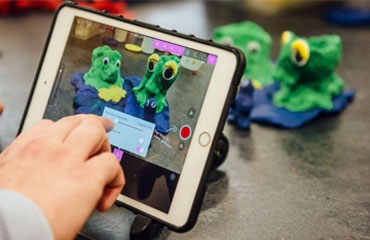
In this course, children learn to create their own stories through Wallace & Grommitt type clay figures and Lego city models. They will learn to create story boards before shooting their own movie complete with audio and special effects animations. The children will be encouraged to work in teams to bounce off ideas and become excellent story tellers. In our animation workshops, children:
- Create story boards and narratives
- Plan and create characters
- Edit video and audio tracks
- Use professional equipment and software for capture and editing
- Produce videos and animations for YouTube
- Develop a range of soft skills including presenting, planning, designing and post-production editing
[/fusion_modal][/fusion_builder_column][/fusion_builder_row][/fusion_builder_container]
Related products
-
Python Coding 1 – Easter Holiday Mini-Camp (7th April – 11th April 2025) – AM
£195.00 -
Sale!
Wimbledon – Python Coding, February Half Term Camp (17th Feb – 21st Feb 2025)
Original price was: £375.00.£337.50Current price is: £337.50. -

Roblox Coding – Spring Term 2025
£135.00 This product has multiple variants. The options may be chosen on the product page -
Sale!
Blackheath – Easter Holiday Camp (14th April – 17th April 2025)
Price range: £57.00 through £205.20